




Demonstrating your value for money is a challenge for charities of all sizes. But it’s often toughest for the smallest charities, running with lean teams without specialist data experts or economists on hand to help. This means it’s often easy to overlook, and underestimate, the value of small charities’ work.
Without clear ways to articulate their economic impact, small charities can find it harder to attract funding, influence decision-makers, or compete with larger organisations, even when their work delivers exceptional results.That’s why PBE has partnered with The Fore to pilot a new tool that’s quick and easy to use. It allows small charities to translate improvements in wellbeing into economic evidence, helping them get the recognition they deserve.
We’ve blogged about this before and reported some very promising results from one of the earliest adopters, Mandem Meetup. This latest blog looks at the data from another small charity involved in the pilot – another example of a small charity that’s potentially delivering big value.
As a reminder, here’s how our new tool works. Charities receive a link to an online survey which they share with their beneficiaries. It’s short, taking about five minutes to complete. The questions focus on understanding who’s completing the survey, what their wellbeing level is (measured by the Office for National Statistics’ question, “Overall, how satisfied are you with your life nowadays?”) and how long they’ve been working with the charity.
The data from that survey goes to a central data bank, looked after by PBE and The Fore (with each charity able to access its own data). Key findings are pulled into a live dashboard for each charity. This shows what percentage of beneficiaries have low levels of wellbeing when they first join, and how that changes for people who have been using the charity’s services for at least six months. This is the first step in estimating the economic value created by participating charities and the results, so far, are impressive.
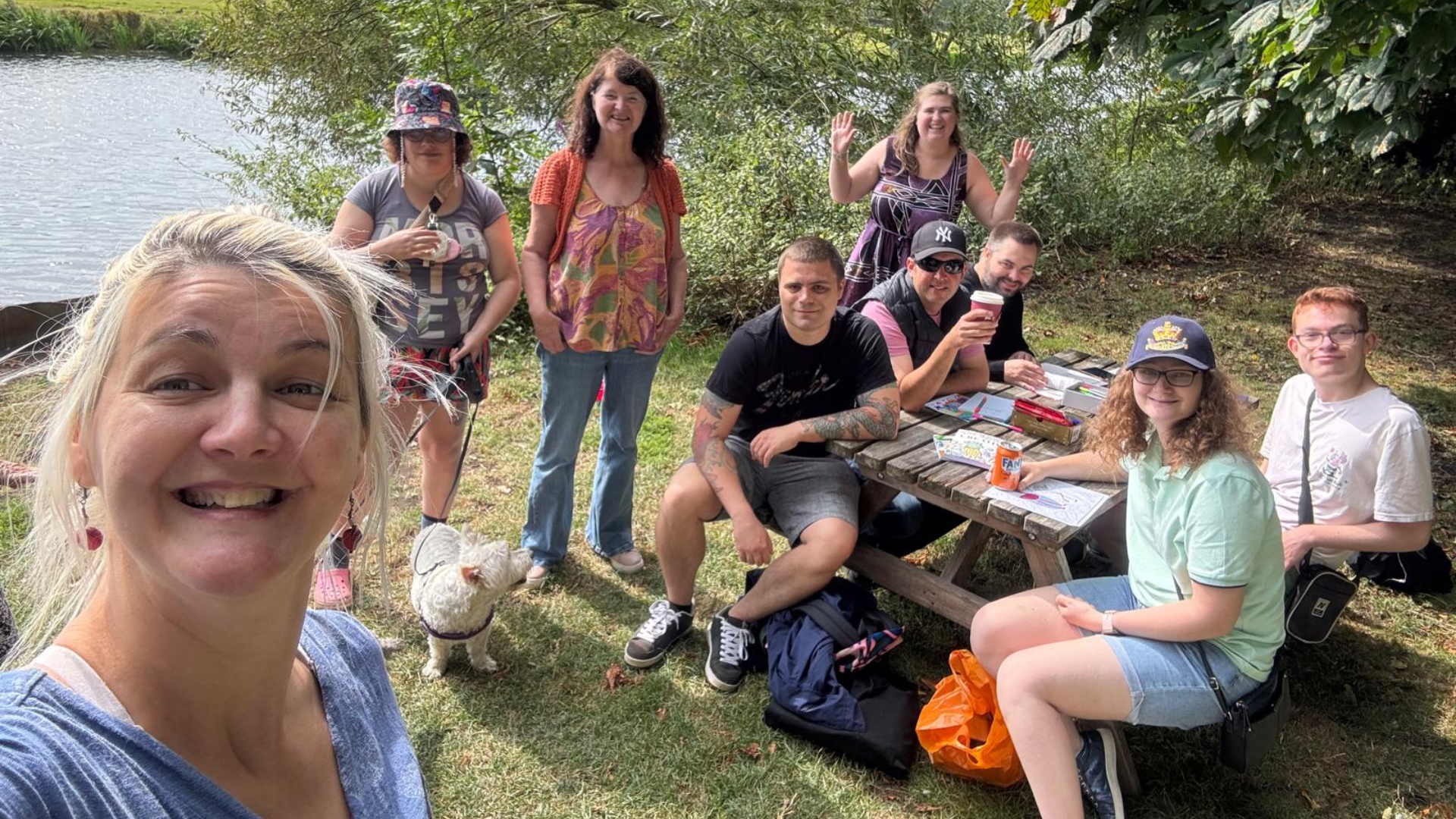
One of the social enterprises taking part in the pilot is Safe Soulmates. Safe Soulmates creates safe and inclusive spaces for neurodivergent and disabled adults to enable people to connect, build friendships and explore opportunities. Through social events, volunteering and employment they empower individuals to contribute their strengths and talents while fostering a peer-led community.
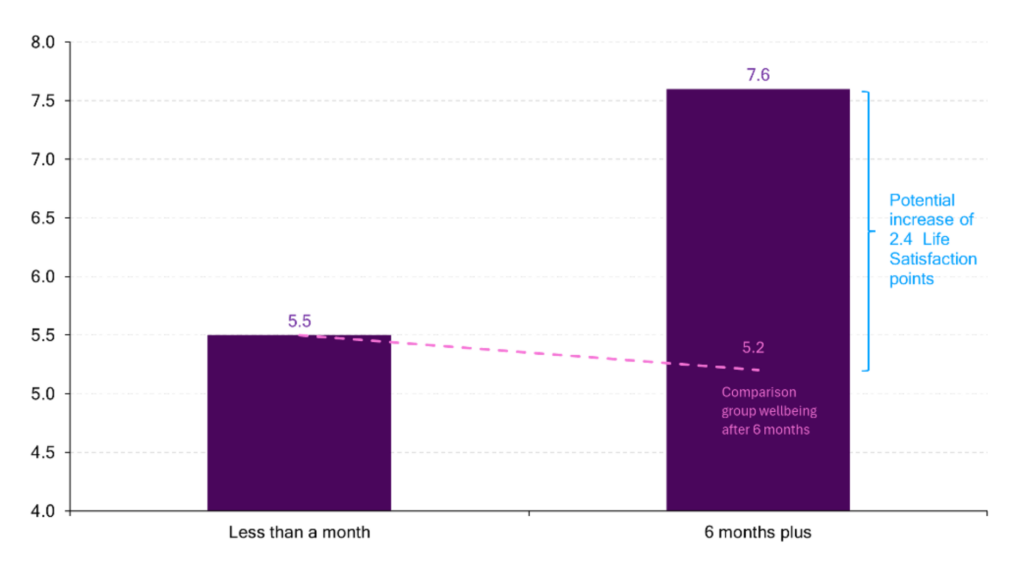
When participants first engage with Safe Soulmates, their average life satisfaction score is 5.5 out of 10 – well below the national average of 7.6. But the longer people stay involved, the higher their wellbeing scores tend to be. For participants engaged for more than six months, the average score rises to 7.6 – in line with the national average level of wellbeing.
If these differences reflect the typical journey a participant goes on, that suggests an improvement of around 2.1 life satisfaction points after more than six months with Safe Soulmates. That’s three times the boost in wellbeing we tend to see when people stop feeling severely lonely.
A soulmate (beneficiary) said: ‘It makes me feel happy to have things to do and to see friends. I am getting more confident about going out and trying new things.’
A key challenge is understanding what might have happened to someone’s wellbeing if they hadn’t engaged with the charity at all. Here, we use a statistical technique called matching to identify a demographically similar comparison group. This helps us estimate how wellbeing might have changed without the charity’s support, giving us more confidence that any observed improvements are genuinely due to the charity’s work.
When we do this for Safe Soulmates, the results are even stronger. Using data from Understanding Society, we see that a similar group of people – facing comparable health and wellbeing challenges – typically experience a decline in wellbeing of around 0.3 points over a similar period. Taken together, this suggests Safe Soulmates could be contributing to a 2.4-point increase in life satisfaction for its participants.
Figure 1: Wellbeing of Safe Soulmates participants is higher the longer they’ve been involved
Average life satisfaction score out of 10 by length of engagement with the charity
Using HM Treasury’s wellbeing valuation methodology, we can put a monetary value on this change. A 2.4-point increase in life satisfaction is worth around £39,000 per participant, assuming the improvement lasts for just one year. With an average cost of around £1,750 per participant, this suggests the programme could be generating as much as £22 of wellbeing value for every £1 spent.
Of course, things aren’t quite that simple. At the moment, we’re comparing two different groups: people who are just starting out, and those who’ve been engaged for more than six months..
We can address this by collecting data from the same people at different points in their journey. We’re already doing this with Safe Soulmates, and once we have enough “before and after” data, we’ll be able to produce even stronger evidence of impact.
Watch this space as we continue to roll out the pilot. The more data we collect, the stronger the evidence will be that small charities like Safe Soulmates can drive big improvements in life satisfaction and deliver amazing value for money. The power of small really does shine through.